

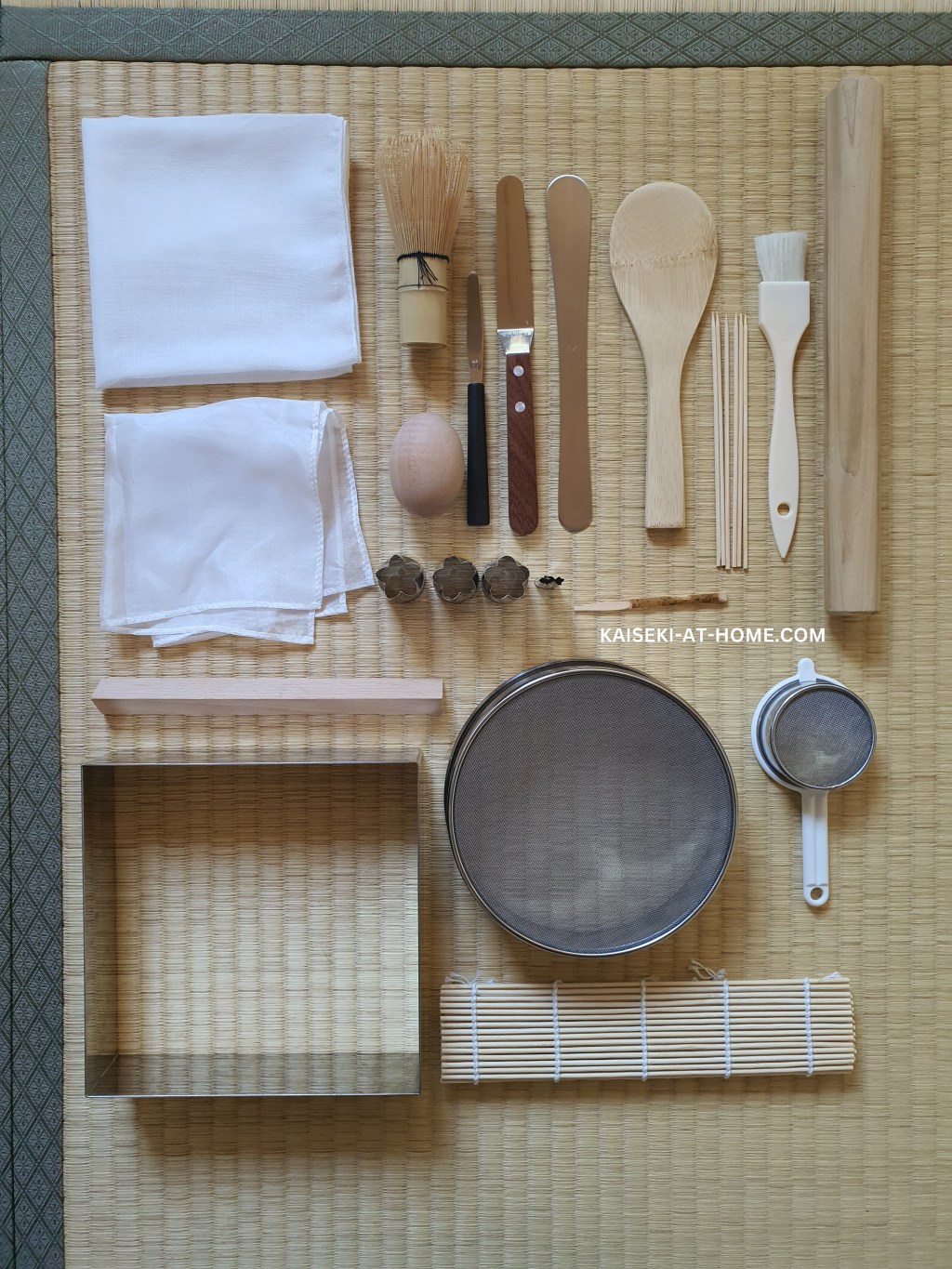
I am going to put a few links in the article to make sourcing easier for you. For transparency I want to also tell you that I might earn a small comission from qualifying purchases as an Amazon associate – there are no additional costs for you though! And by the way: You can even order things directly from Amazon Japan if you can not find them on your own country’s page! You just need to log into Amazon Japan with your normal username and password and put your home adress as your delivery adress. It will even add customs taxes (if needed) etc. to the total price so you don’t get any nasty surprises. I have personally gotten a lot of stuff this way when I was living back home 🙂
In case it wasn’t clear from the first picture – I adore a good gadget! So there will be lots of fun stuff in this post.
I find tools and gadgets especially fascinating because the more tools you know the more the mystery gets lifted. Wagashi tea ceremony sweets look like tiny pieces of art and I was always mystified an how they are formed. Now that I have taken classes and gotten to know the techniques I am happy to say that it is not that difficult!
Because Wagashi sweets have a very short shelf life and most are not suitable for freezing they do not get exported unfortunately. Mochi is the only exception, but if you had fresh pillowy Mochi dough before, the defrosted ones just won’t cut it any more. So if you are into Japanese sweets you need to make them yourself to ensure optimal quality. And I am going to show you how, don’t you worry! But first off I am going to introduce you to some of the tools that are used in WAGASHI making. I was completely lost at first, mostely because I didn’t know the names of most of these and that makes searching for them incredibly difficult. So you definitely get a head start on your journey.
You definietly do not need to get all of these tools right away! Just add to your collection whenever the need arises. If you are like me, just browsing what’s out there can be fun as well. Or you can use this list as a shopping guide for your next Japan trip (there is a printable list at the end). Anyway, I am posting everything that I use right here, because I want to be able to link back to this page when I am writing more recipes later on. If new things enter my collection I am going to add those over time as well.
I’m sure we will have so much fun making Wagashi together! And you will be able to impress all your friends with these little works of art of course.
Oh and most importantly all Wagashi are vegan, fat free and most are gluten free as well! The recipes traditionally have never included any animal products, so you get a 100% authentic experience without compromises.
SANKAKUBOU triangular tool


This is THE Wagashi Tool! If you get nothing else get this! Note how it was 3 different side – one is pointy, one is rounded and one has a cut! To form beautiful shapes you definitely need this tool.
Check Amazon Japan for the original product
Check Amazon.com for shipping in the US & Canada
Check Amazon.de (similar product) for shipping in Europe
MAKISU bamboo mat
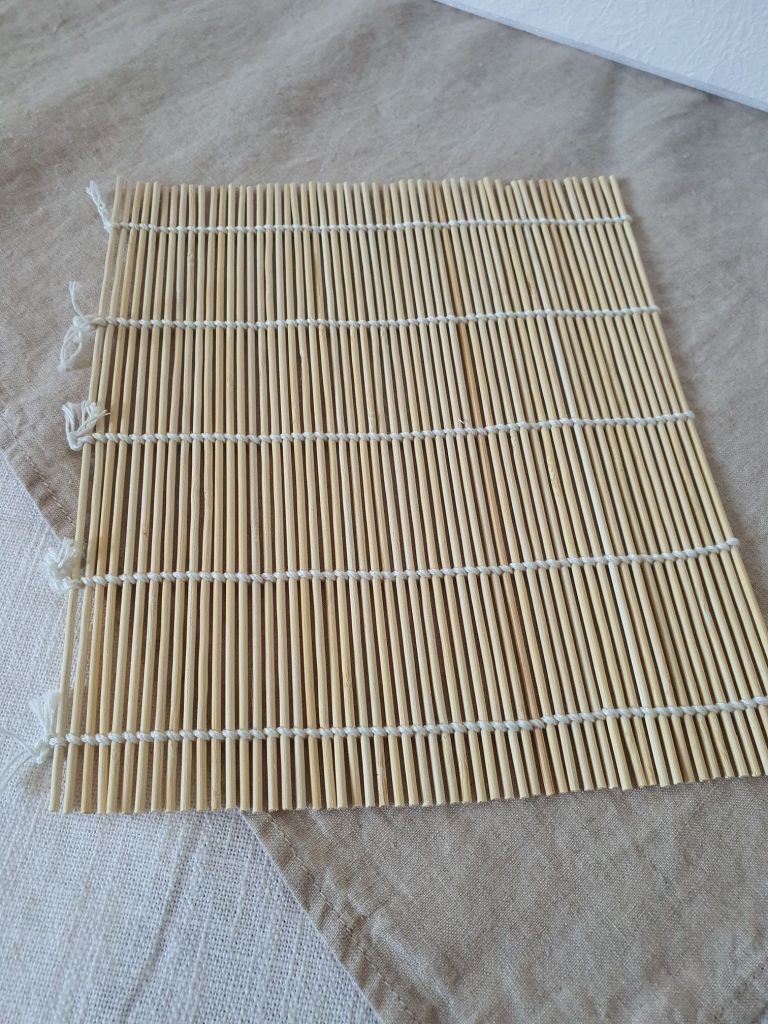
The bamboo mat is needed for steaming doughs. It is used as a buffer between the hot metal of your steamer and your dough. Definitely a must have if you are going to steam Wagashi. It also stops your doughs from sitting in the condensation that drips down from the lid. And by the way: This is not the mat I use for Sushi! The one I show here, that I put in my steamer is a very inexpensive one that I don’t mind getting wet.
Check Amazon Japan for the original product
Check Amazon.com for shipping in US & Canada
Check Amazon.de for shipping in Europe
CHAKOSHI small tea sieve
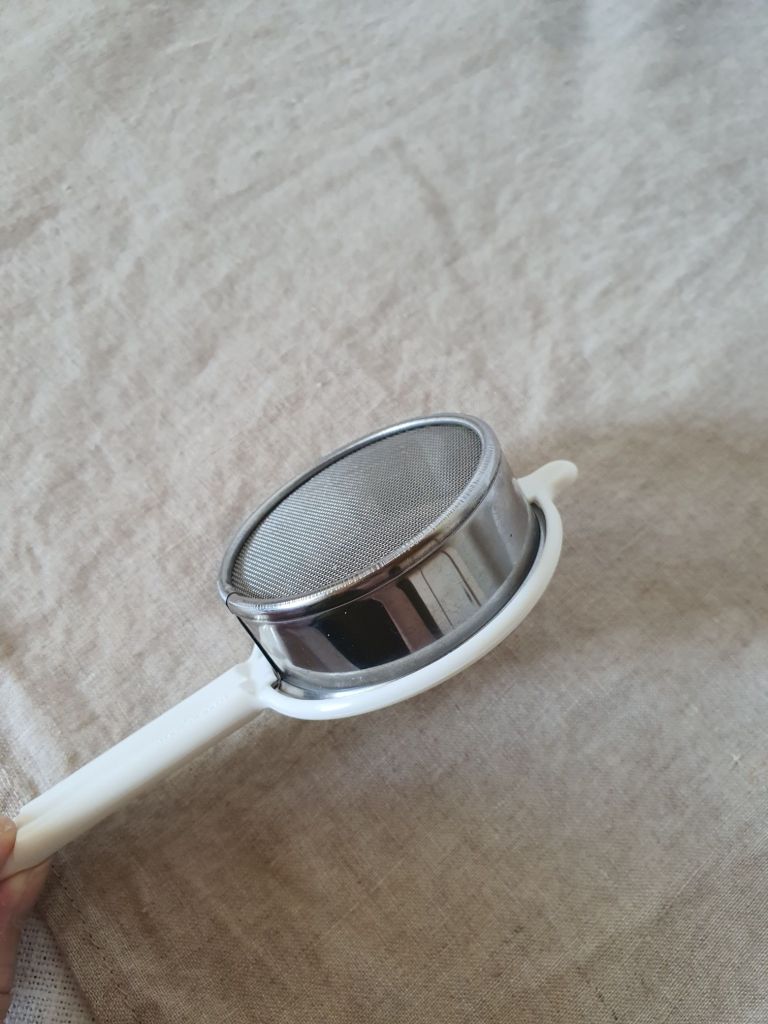
Any tea sive works for this. The most important attributes are a fine mesh and ideally it should be flat. We are going to use it to make small details of flowers by pushing dough through it and they will be more uniform if the surface is flat.
Check Amazon Japan: for the original product
Check Amazon.com for shipping in the US & Canada
Check Amazon.de for shipping in Europe
URAGOSHI strainer

This is a fine meshed strainer – we will mainly use it to mash things thru it to achieve a finer consistency. It needs to have a flat surface for it to effectively work!
Check Amazon Japan: for the original product
Check Amazon.com for shipping in the US & Canada
Check Amazon.de for shipping in Europe
SERUKURU frame
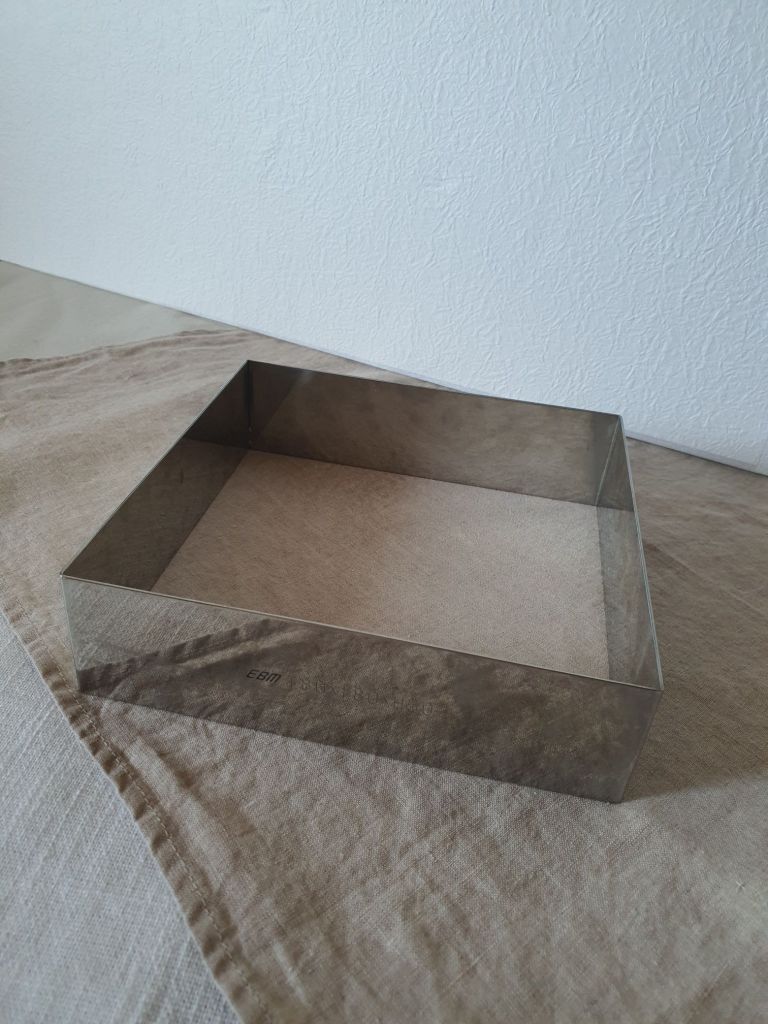
This is a 18x18cm frame which is used for most recipes. It needs to be able to withstand heat, because we will use it for steaming.
Check Amazon Japan: for the original product
Check Amazon.com for shipping in the US & Canada
Check Amazon.de for shipping in Europe
NUKIGATA cookie cutters
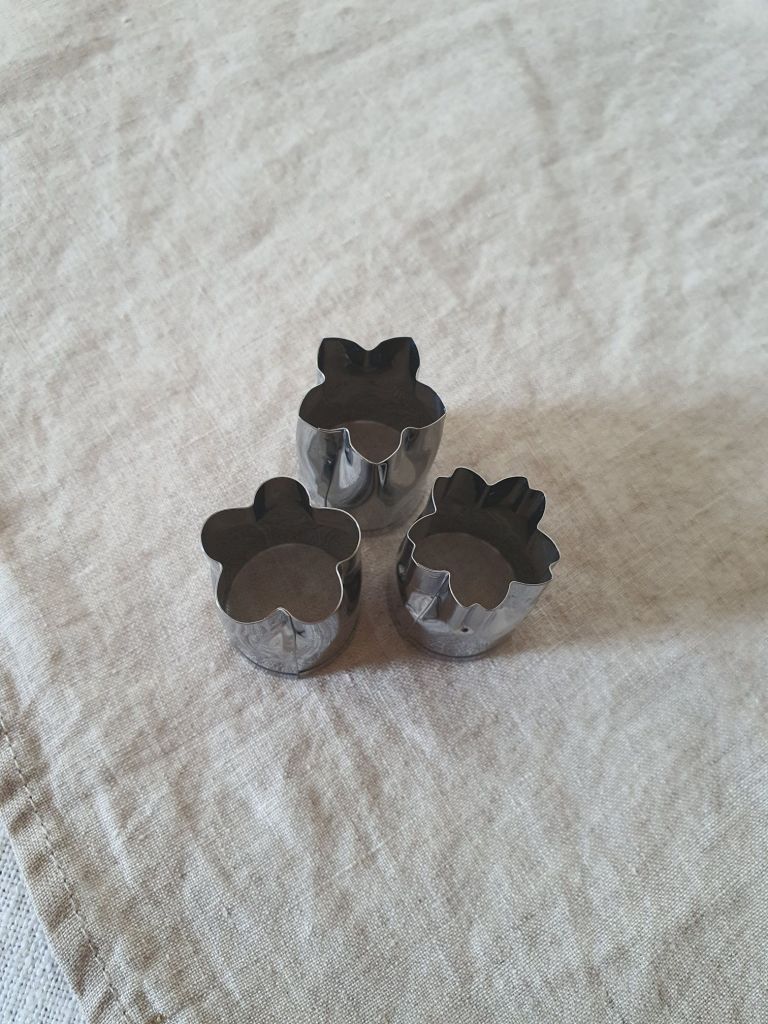
These 3 are the most classic shapes: UME plum blossom (winter), SAKURA cherry blossom (spring) and KIKYO bellfower (summer). To make the set complete I should probably add MOMIJI japanese maple or ICHOU ginko leaf.
Check Amazon Japan: for the original product
Check Amazon.com for shipping in the US & Canada
Check Amazon.de for shipping in Europe
KINGYO goldfish
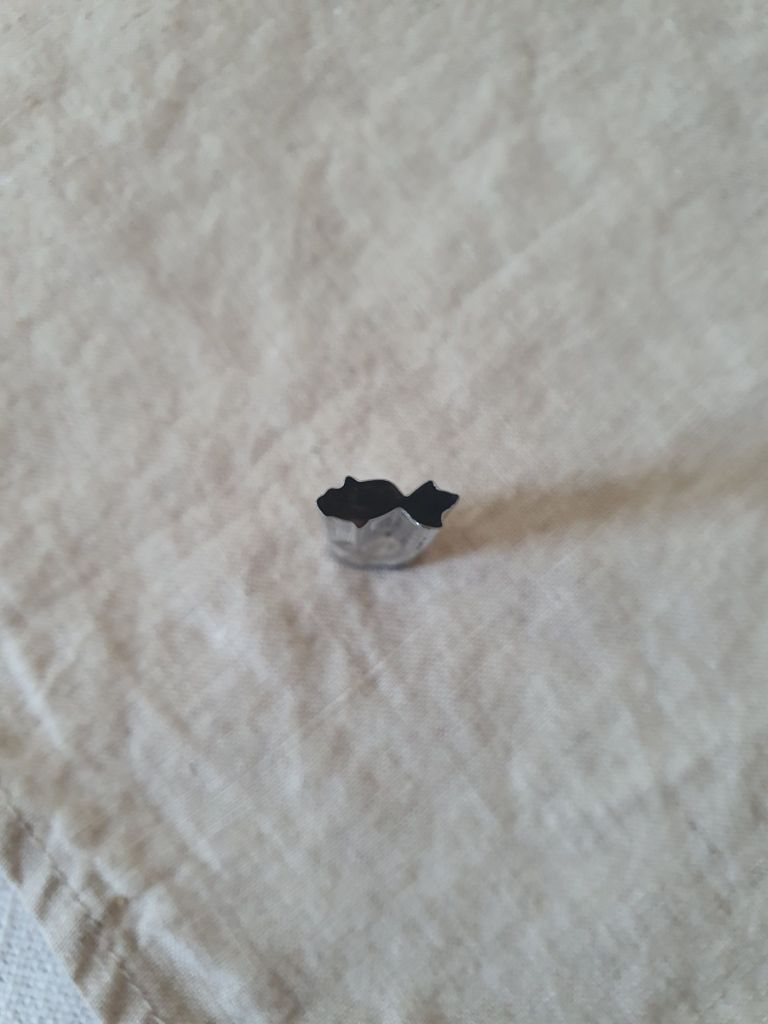
This is without a doubt my most favourite cutter! It is sooooo tiny (check the first picture up top and see if you can find it!) and it is absolutely adorable. I want to make a tiny goldfish pond wagashi in summer and got it for that purpose.
Check Amazon Japan: for the original product
MENBOU rolling pin
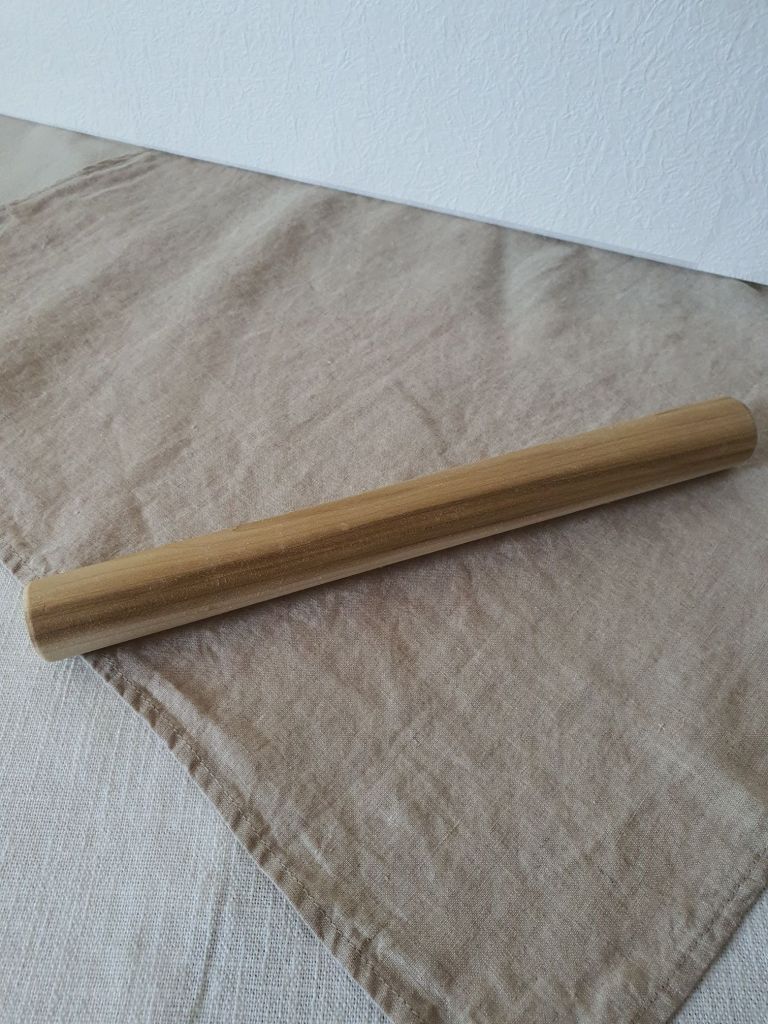
This is a classic japanese rolling pin. I use it for lots of things, like making Wagashi, noodles and whacking things 🙂
Check Amazon Japan: for the original product
Check Amazon.com for shipping in the US & Canada
Check Amazon.de for shipping in Europe
MARU OSHIGATA round pusher
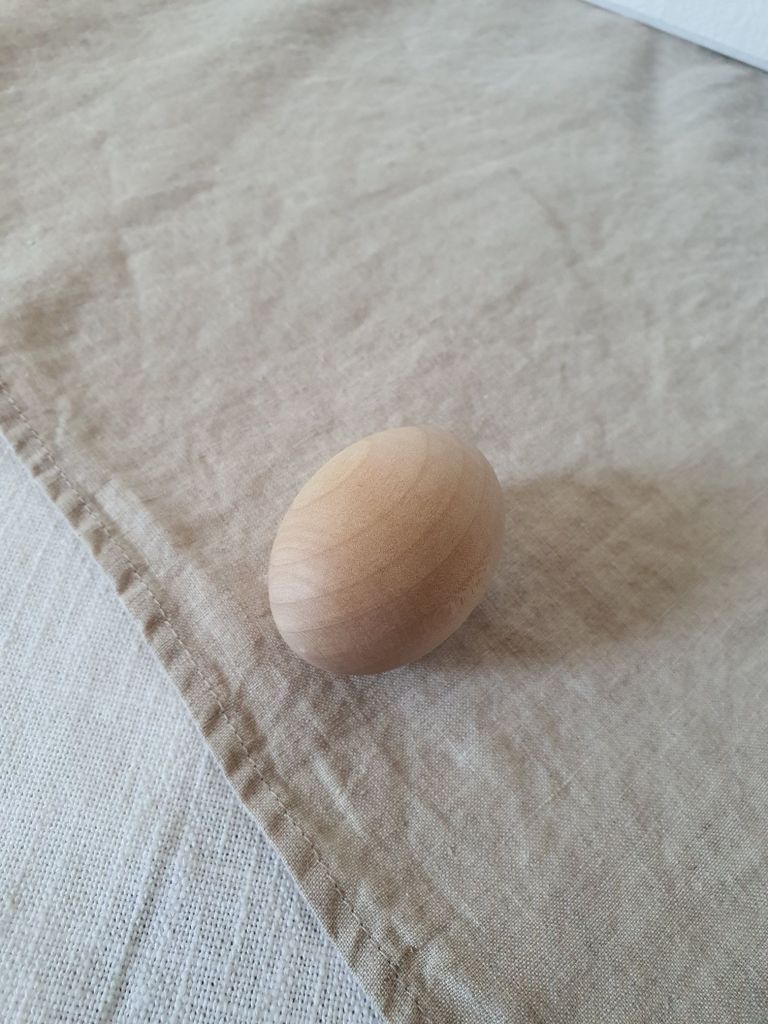
It is basically a wooden egg and used for making flower bud shapes.
Check Amazon Japan: for the original product
Check Amazon.com for shipping in the US & Canada
KUROMOJI wagashi “fork”

This is the implement that you traditionaly eat wagashi with. It is made of Kuromji wood and that’s where the name comes from. If you participate in a tea ceremony everyone is expected to bring their own kuromoji. If you have wagashi at the end of a course meal they either supply a Kuromoji or lacquer fork for you. Metal is a big no-no, because it damages the expensive plates.
Check Amazon Japan: for the original product
HAKE brush

Used to dust off the starch (off mochi for example) or glaze sweets.
Check Amazon Japan: for the original product
Check Amazon.com for shipping in the US & Canada
Check Amazon.de for shipping in Europe
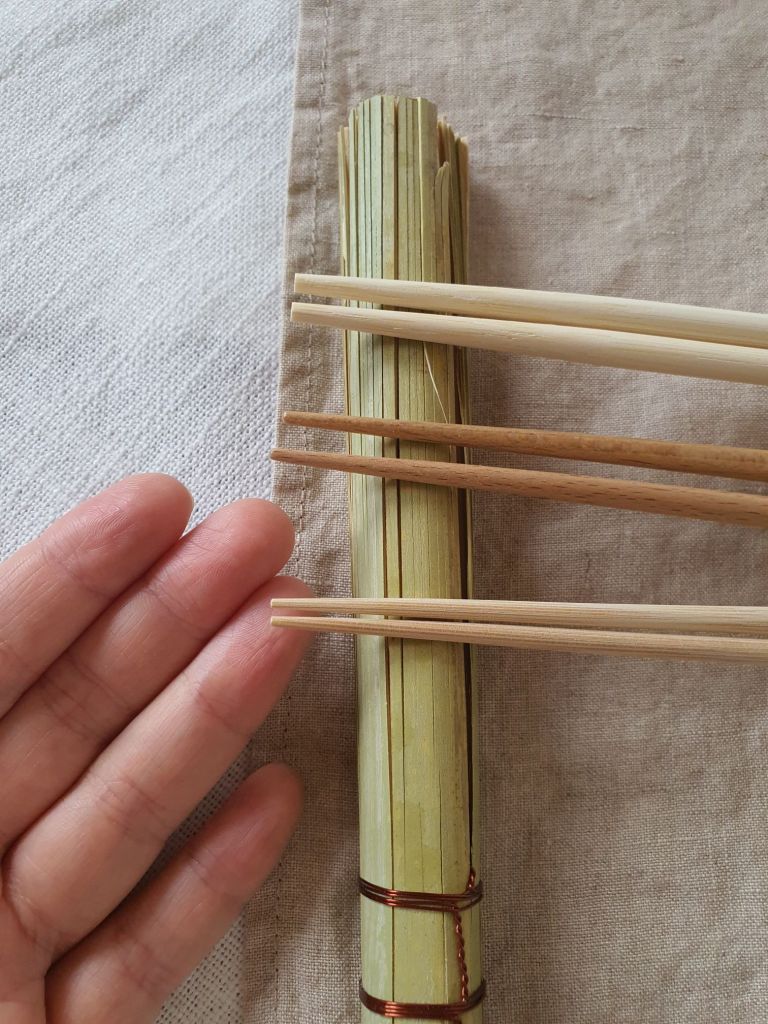
TAKEGUSHI bamboo skewers
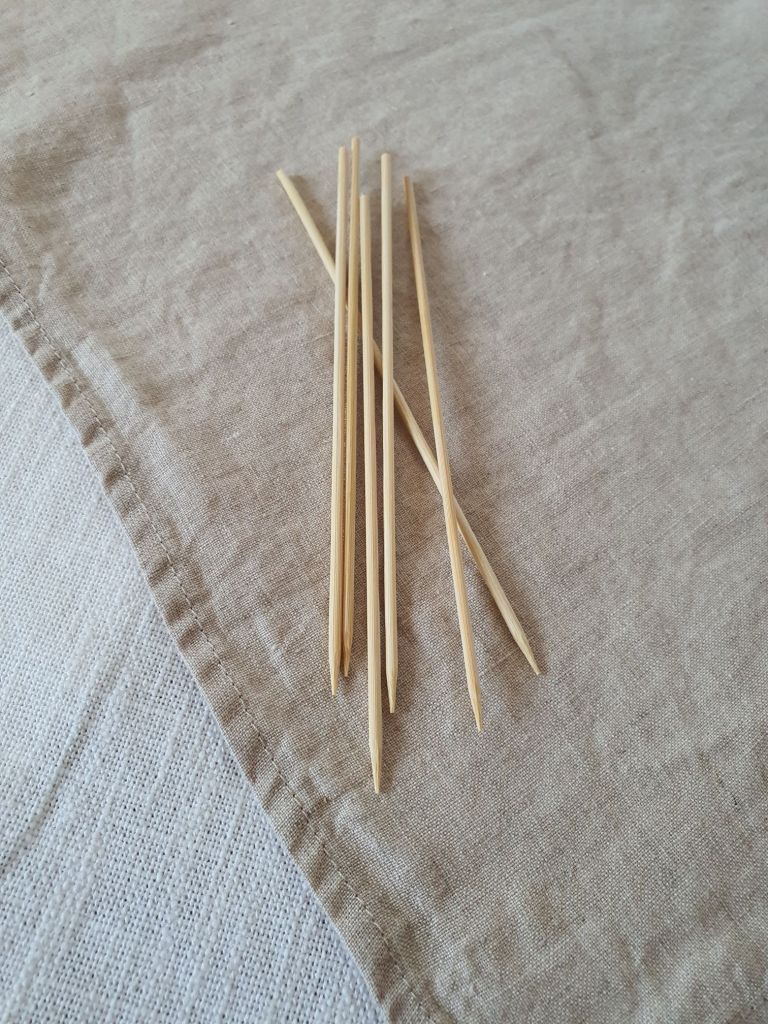
We will use them for fine detail work instead of chopsticks. Make sure that they have super pointy tips when you choose them.
Check Amazon Japan: for the original product
Check Amazon.com for shipping in the US & Canada
Check Amazon.de for shipping in Europe
MIYAJIMA paddle
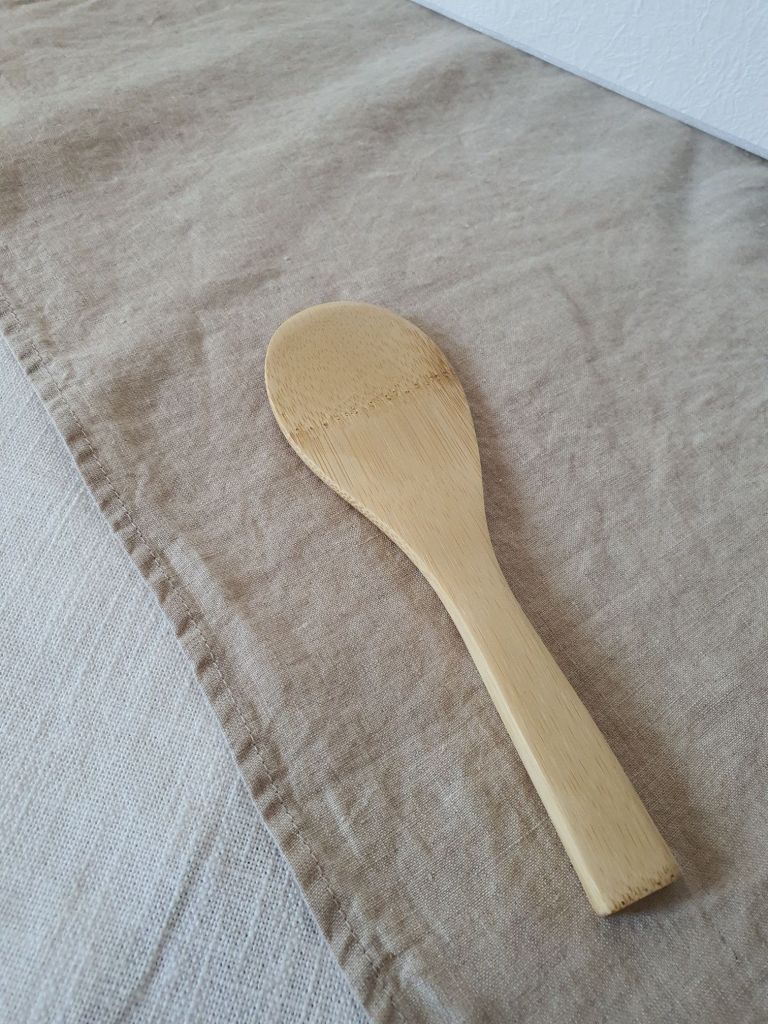
If you have learned japanese before you will probably wonder why it is not called “Oshamoji”. In professional kitchens this paddle is called MIYAJIMA and it is used not only for portioning rice but also to mash things through strainers.
Check Amazon Japan: for the original product
Check Amazon.com for shipping in the US & Canada
Check Amazon.de for shipping in Europe
ANBERA bean paste spatula

This tool is super useful if you want to fill soft doughs nicely. I mainly use it for An-Pan bread and Mochi.
Check Amazon Japan: for the original product
Check Amazon.com for shipping in the US & Canada
Check Amazon.de for shipping in Europe
small offset spatula

It’s just generally a nice tool to have for all kinds of things. And it takes up way less space than a full on offset spatula.
Check Amazon Japan: for the original product
Check Amazon.com for shipping in the US & Canada
Check Amazon.de for shipping in Europe
Mini spatula

This one is super useful if you want to make fine lines or manipulate some details without desturbing the whole arrangement.
Check Amazon Japan: for the original product
CHASEN tea whisk

The tea whisk’s side can be used to make interesting textures on the sweets.
Check Amazon Japan: for the original product
Check Amazon.com for shipping in the US & Canada
Check Amazon.de for shipping in Europe
CHAKIN silk cloth

This is a super fine silk cloth used for a technique called CHAKIN SHIBORI. Note how the silk is so thin that you can see the background shining trough. If you search for something similar that is the thinness that you are looking for.
Check Amazon Japan: for the original product
Check Amazon.com for shipping in the US & Canada
SARASHI cotton cloth


Also know as “WABUKIN”. It is a relatively loosely woven cotton cloth and we will mainly us it for steaming
Check Amazon Japan: for the original product
Check Amazon.com for shipping in the US & Canada
Printable Tool List
List
- 三角棒 SANKAKUBOU 三角ぺら SANKAKUPERA triangular tool
- 巻きす MAKISU bamboo mat
- 茶漉し CHAKOSHI
- 裏漉し URAGOSHI strainer
- 角セルクル18x18cm frame
- 抜き型 NUKIGATA shape cutters
- 麵棒 MENBOU rolling pin
- 丸押し型 卵型 MARU・OSHIGATA wooden egg shape
- 黒文字 KUROMOJI wagashi fork
- 刷毛 HAKE brush
- 竹串 TAKEGUSHI bamboo skewers
- 宮島 MIYAJIMA wooden paddle
- あんべら 餡べら ANBERA Anko spatula
- 茶筅 CHASEN bamboo whisk
- 茶巾 CHAKIN thin silk cloth
- さらし 和布巾 SARASHI cotton cloth
I hope you got to know lots and lots of new and exciting treasures and will be able to integrate some of them into your own tool box!

If you like my posts please consider making a donation!
Make a monthly donation
Make a yearly donation
It helps to keep the lights on in my kitchen and more importantly it helps to pay for all the ingredients I need to buy to keep on making this lovely content. If you are able to it would be delightful if you could contribute something.
Or enter a custom amount
Thank you so much, I really appreciate your support!
Your contribution is appreciated.
Your contribution is appreciated.
DonateDonate monthlyDonate yearly
 Kaiseki at Home
Leave a comment